Trauma-Informed Resources · TI-02
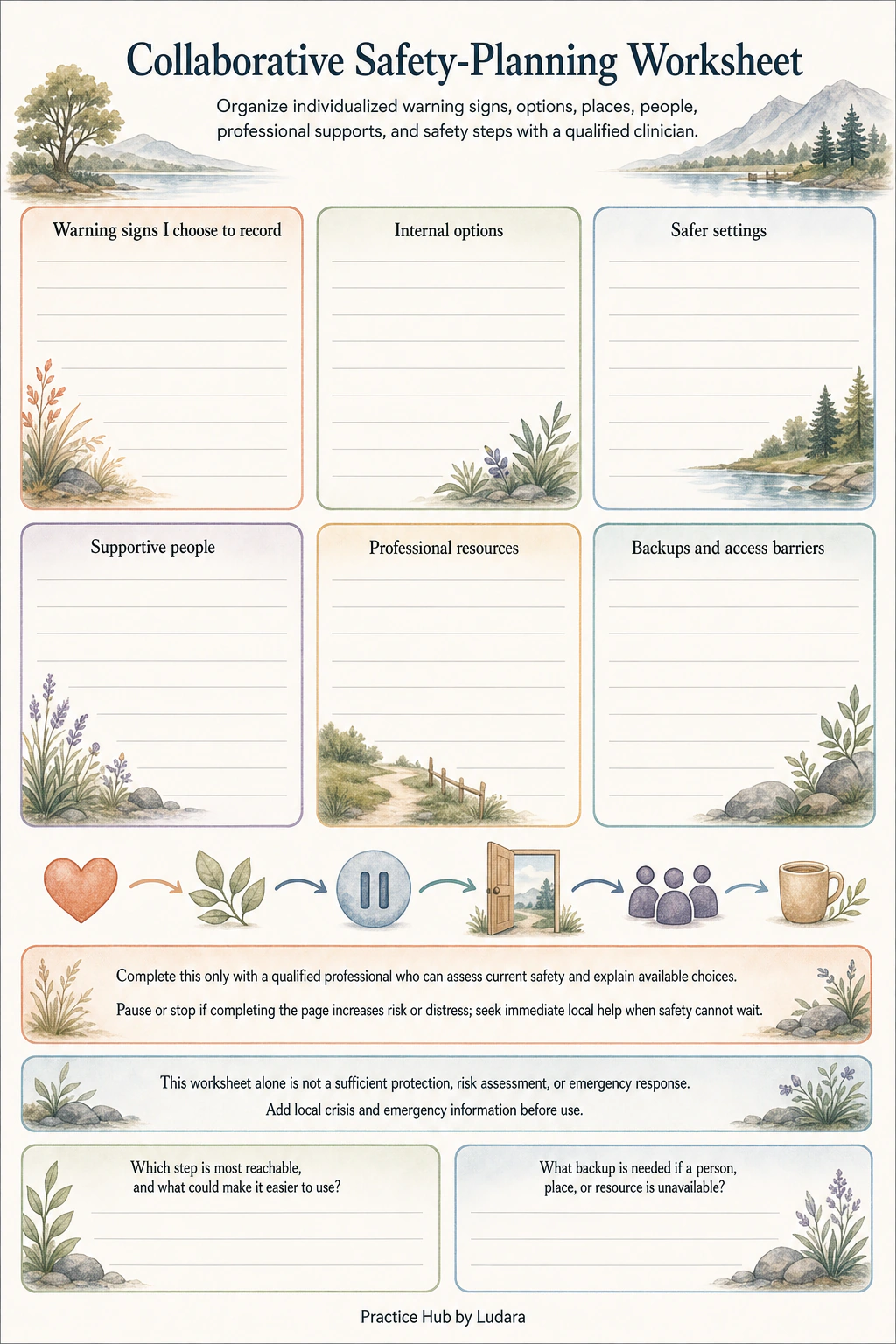
Collaborative Safety-Planning Worksheet
Organize individualized warning signs, options, places, people, professional supports, and safety steps with a qualified clinician.
Specialist review required Teens and adults where clinically and developmentally appropriate; clinician-led
 20-40 minutes
 Guided worksheet
 Complete page
 View collection
Full-resolution WebP artwork with print-safe margins. Review the guidance below before use.
How to use it
- Complete this only with a qualified professional who can assess current safety and explain available choices.
- Choose what to record about warning signs, internal options, safer settings, supportive people, and professional resources.
- Add access details, barriers, backups, and any locally required safety steps.
- Pause or stop if completing the page increases risk or distress; seek immediate local help when safety cannot wait.

Reflection prompts
- Which step is most reachable, and what could make it easier to use?
- What backup is needed if a person, place, or resource is unavailable?

Facilitator guidance
Use only within a current individualized risk assessment and the practice's approved safety-planning protocol. Customize professional resources, escalation routes, confidentiality limits, safeguarding duties, documentation, and any means-safety content to local law, licensing rules, setting, age, access, and policy. Confirm feasibility rather than merely filling every box.

Adaptations & accessibility
- Create a discreet portable or digital version only when storage is safe.
- Use icons, dictation, translated copy, or supported communication.
- Develop separate daytime, nighttime, access-barrier, and unavailable-support backups.

Review considerations
Enhanced licensed trauma/safety specialist, legal, safeguarding, and local-policy review is required before use. Local crisis and emergency information must be added by the implementing practice. This worksheet alone is not a sufficient protection, risk assessment, emergency response, or substitute for immediate local help.