Trauma-Informed Resources · TI-07
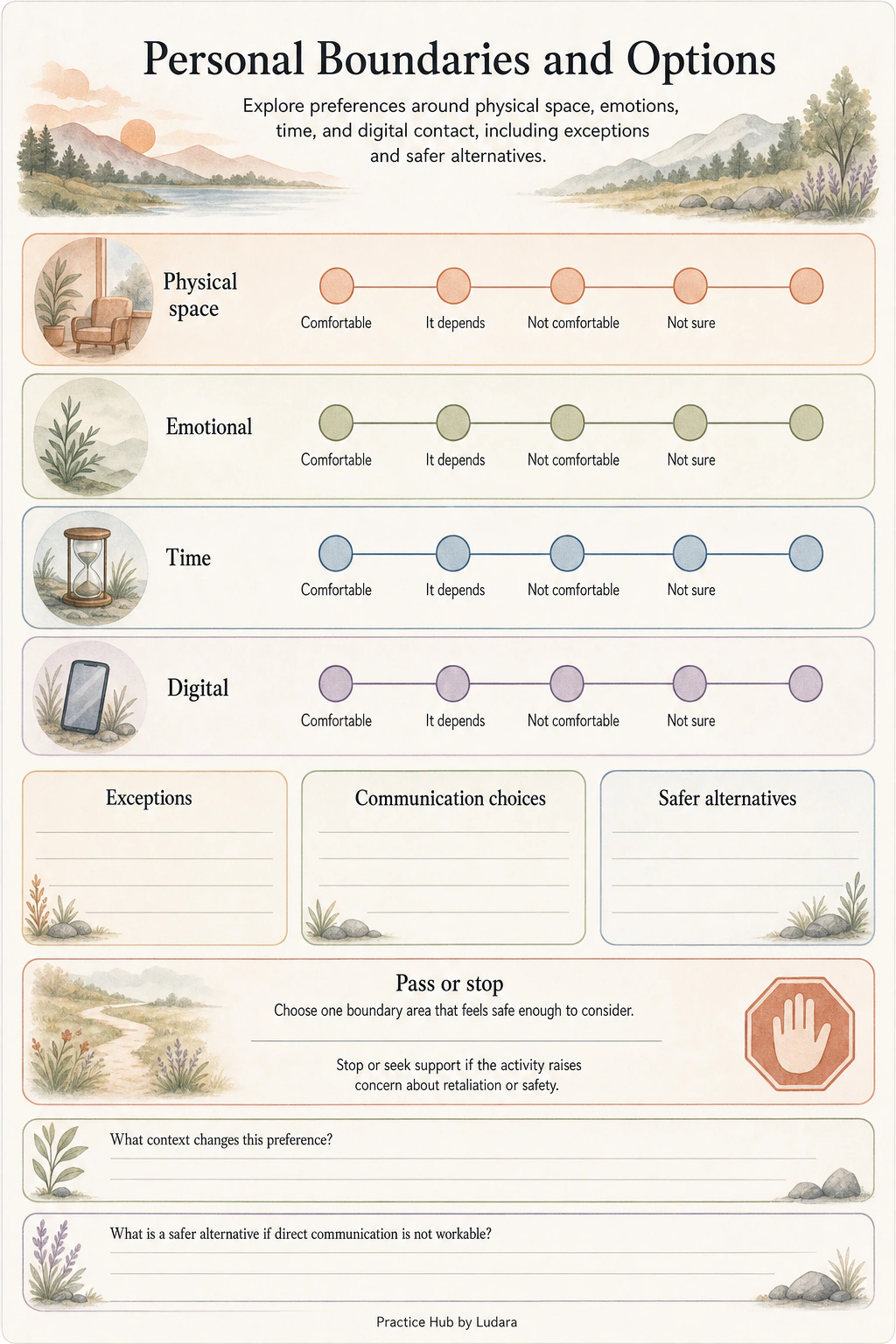
Personal Boundaries and Options
Explore preferences around physical space, emotions, time, and digital contact, including exceptions and safer alternatives.
Specialist review required Teens and adults with trauma-informed support
 15-25 minutes
 Guided worksheet
 Complete page
 View collection
Full-resolution WebP artwork with print-safe margins. Review the guidance below before use.
How to use it
- Choose one boundary area that feels safe enough to consider.
- Mark preferences along a continuum; ‘it depends,’ ‘not sure,’ and private answers are valid.
- If you want, add exceptions, communication options, and safety alternatives.
- Stop or seek support if the activity raises concern about retaliation or safety.

Reflection prompts
- What context changes this preference?
- What is a safer alternative if direct communication is not workable?

Facilitator guidance
Explore preferences without requiring disclosure or direct assertion. Consider culture, disability, dependence, surveillance, retaliation risk, and abuse context; validate delayed, indirect, digital, third-party, or exit-based strategies.

Adaptations & accessibility
- Use visual scales, removable markers, or private digital completion.
- Discuss fictional examples or one boundary domain only.
- Offer AAC-supported choices and a no-response option.

Review considerations
Enhanced licensed trauma-specialist and safeguarding review required before use, especially for abuse, coercive control, surveillance, developmental vulnerability, or cultural differences.
This is a layout-complete draft. Complete the stated clinical, accessibility, and local-policy review before client use or publication.