Trauma-Informed Resources · TI-10
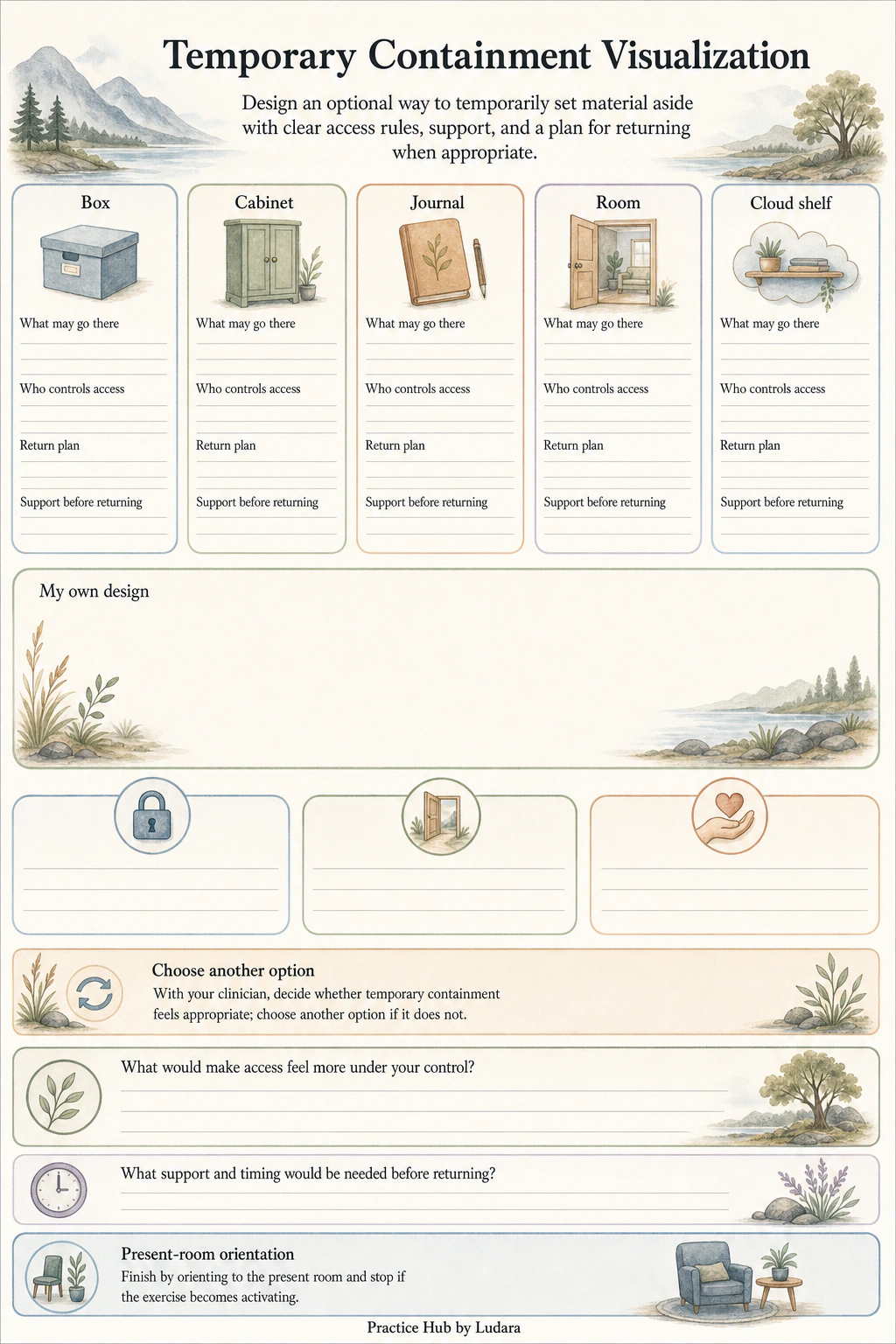
Temporary Containment Visualization
Design an optional way to temporarily set material aside with clear access rules, support, and a plan for returning when appropriate.
Specialist review required Teens and adults; clinician-led
 10-20 minutes
 Guided worksheet
 Complete page
 View collection
Full-resolution WebP artwork with print-safe margins. Review the guidance below before use.
How to use it
- With your clinician, decide whether temporary containment feels appropriate; choose another option if it does not.
- Design a container or place, who controls access, and what may or may not go there.
- Choose a realistic return plan and the support needed before reopening.
- Finish by orienting to the present room and stop if the exercise becomes activating.

Reflection prompts
- What would make access feel more under your control?
- What support and timing would be needed before returning?

Facilitator guidance
Frame containment as temporary attention management, never deletion, denial, memory removal, or permanent suppression. Assess whether imagery, enclosure, locks, secrecy, or postponement may increase distress or dissociation, and use a different closing strategy when needed.

Adaptations & accessibility
- Use a journal, shelf, schedule, folder, distance marker, or fully non-visual plan.
- Let the participant omit locks, rooms, or any image with unwanted meaning.
- Use a short written return appointment and external orientation cues.

Review considerations
Enhanced licensed trauma-specialist review required before use. Do not use this exercise to avoid safety action, required reporting, care coordination, or clinically necessary follow-up.
This is a layout-complete draft. Complete the stated clinical, accessibility, and local-policy review before client use or publication.