Play Therapy · PT-04
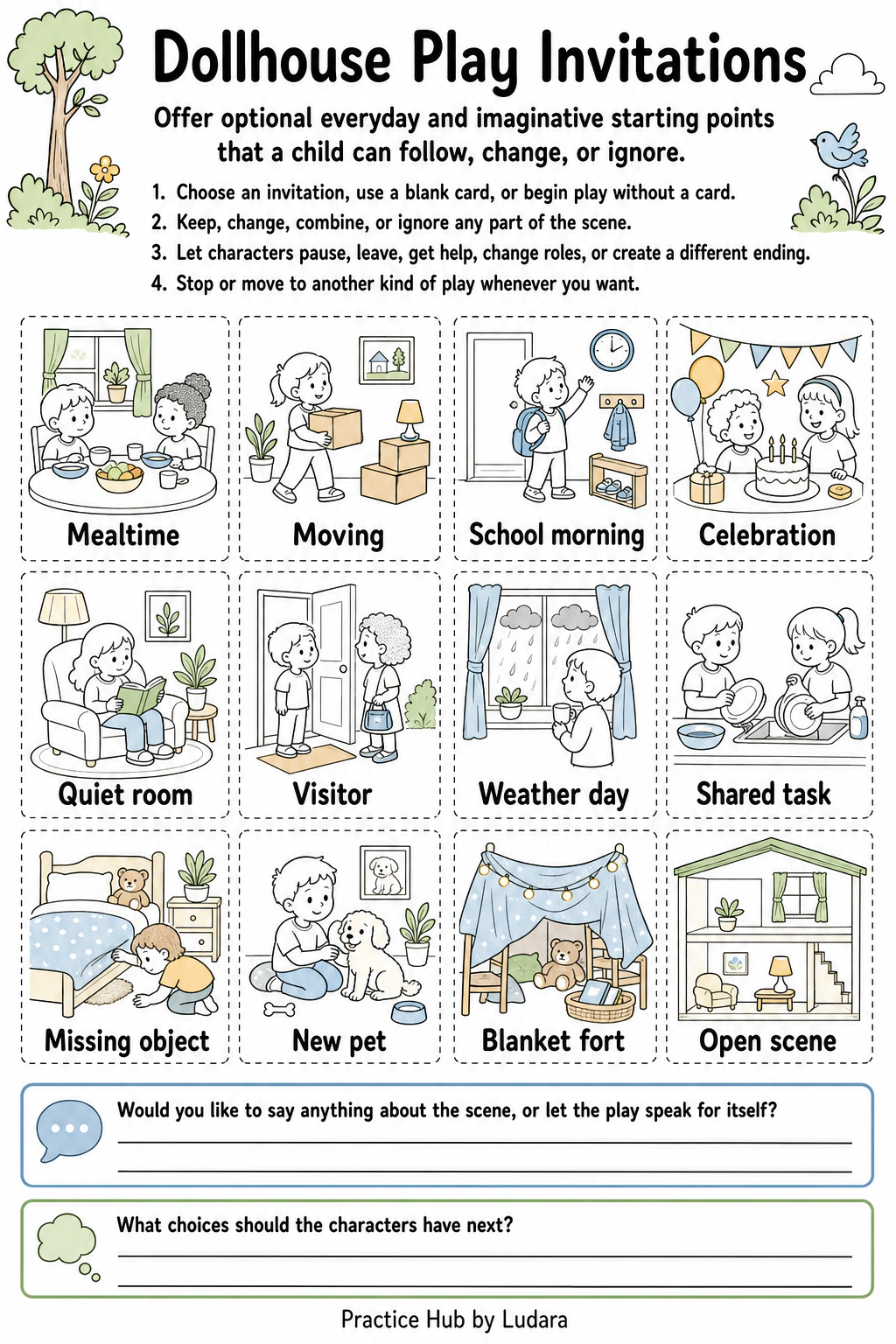
Dollhouse Play Invitations
Offer optional everyday and imaginative starting points that a child can follow, change, or ignore.
Specialist review required Ages 5-12; clinician-facilitated
 10-30 minutes
 Cards
Cards Complete page
 View collection
Full-resolution WebP artwork with print-safe margins. Review the guidance below before use.
How to use it
- Choose an invitation, use a blank card, or begin play without a card.
- Keep, change, combine, or ignore any part of the scene.
- Let characters pause, leave, get help, change roles, or create a different ending.
- Stop or move to another kind of play whenever you want.

Reflection prompts
- Would you like to say anything about the scene, or let the play speak for itself?
- What choices should the characters have next?

Facilitator guidance
Use cards as optional openings, never as prompts to recreate suspected or known trauma. Follow the child's lead, avoid leading questions and symbolic interpretation, and separate therapeutic observation from formal safeguarding assessment.

Adaptations & accessibility
- Use neutral everyday, fantasy, or setting-only cards with no problem introduced.
- Offer miniatures, flat pieces, digital scenes, drawing, or verbal storytelling.
- Reduce sensory complexity and ensure accessible reach and movement.

Review considerations
Enhanced licensed play-therapy and safeguarding review required before use; do not direct trauma reenactment or infer disclosure, culpability, or diagnosis from dollhouse play alone.
This is a layout-complete draft. Complete the stated clinical, accessibility, and local-policy review before client use or publication.