Play Therapy · PT-07
Finish—or Change—the Story
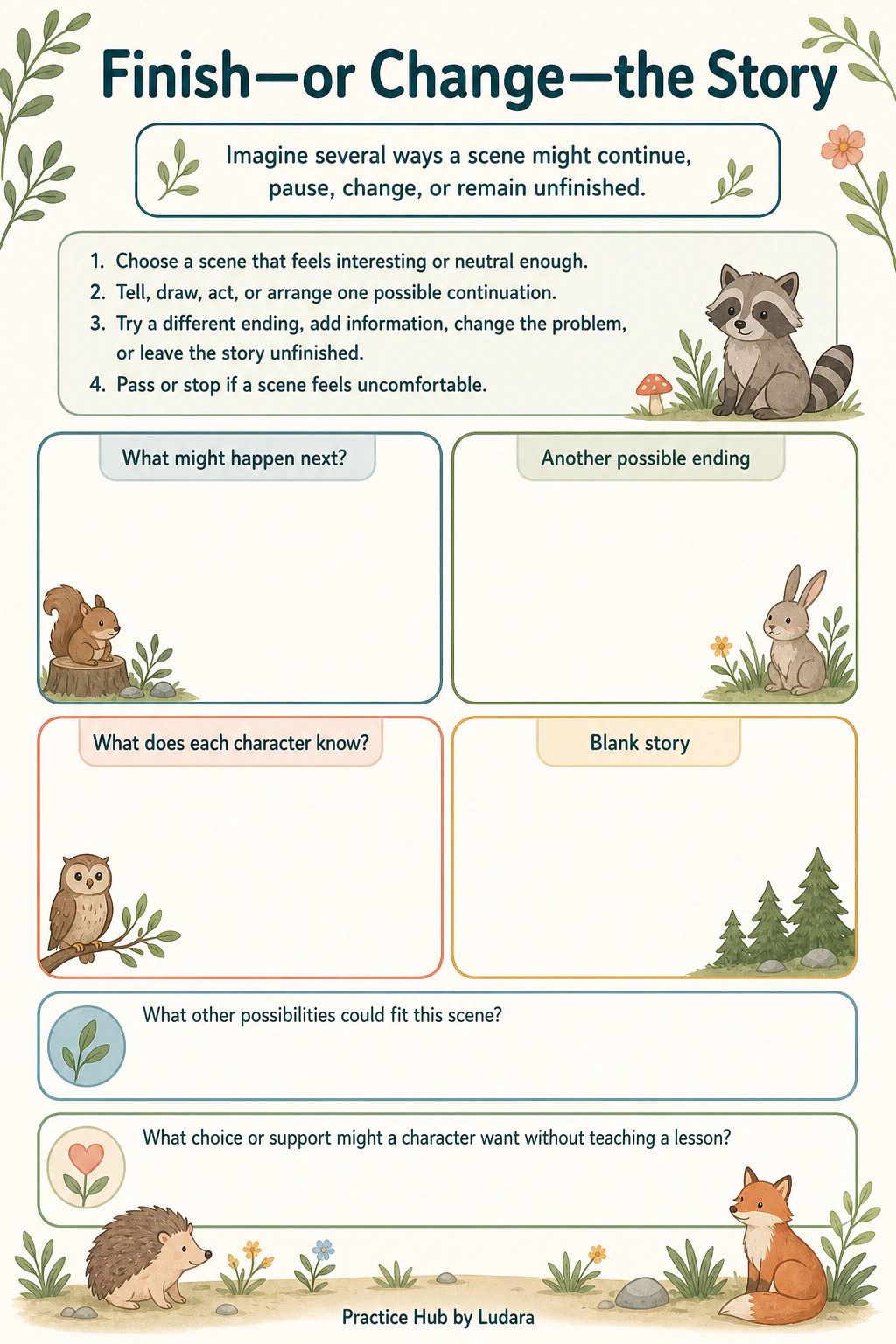
Imagine several ways a scene might continue, pause, change, or remain unfinished.
Clinical review required Ages 6-12
 10-20 minutes
 Activity
 Complete page
 View collection
Full-resolution WebP artwork with print-safe margins. Review the guidance below before use.
How to use it
- Choose a scene that feels interesting or neutral enough.
- Tell, draw, act, or arrange one possible continuation.
- Try a different ending, add information, change the problem, or leave the story unfinished.
- Pass or stop if a scene feels uncomfortable.

Reflection prompts
- What other possibilities could fit this scene?
- What choice or support might a character want without teaching a lesson?

Facilitator guidance
Invite multiple endings and tolerate ambiguity, humor, repetition, refusal, and no resolution. Do not steer the story toward disclosure, confession, forgiveness, moral correction, or a preferred coping response; ask only open questions grounded in what the child created.

Adaptations & accessibility
- Offer sentence starters, picture choices, puppets, AAC, or collaborative drawing.
- Use fantasy, setting-only, or low-stakes scenes.
- Allow the child to change every character and premise before continuing.

Review considerations
Licensed play-therapy review required before use; prompts must remain non-leading and must not turn symbolic stories into assumed biography, trauma disclosure, or moral testing.
This is a layout-complete draft. Complete the stated clinical, accessibility, and local-policy review before client use or publication.