Play Therapy · PT-08
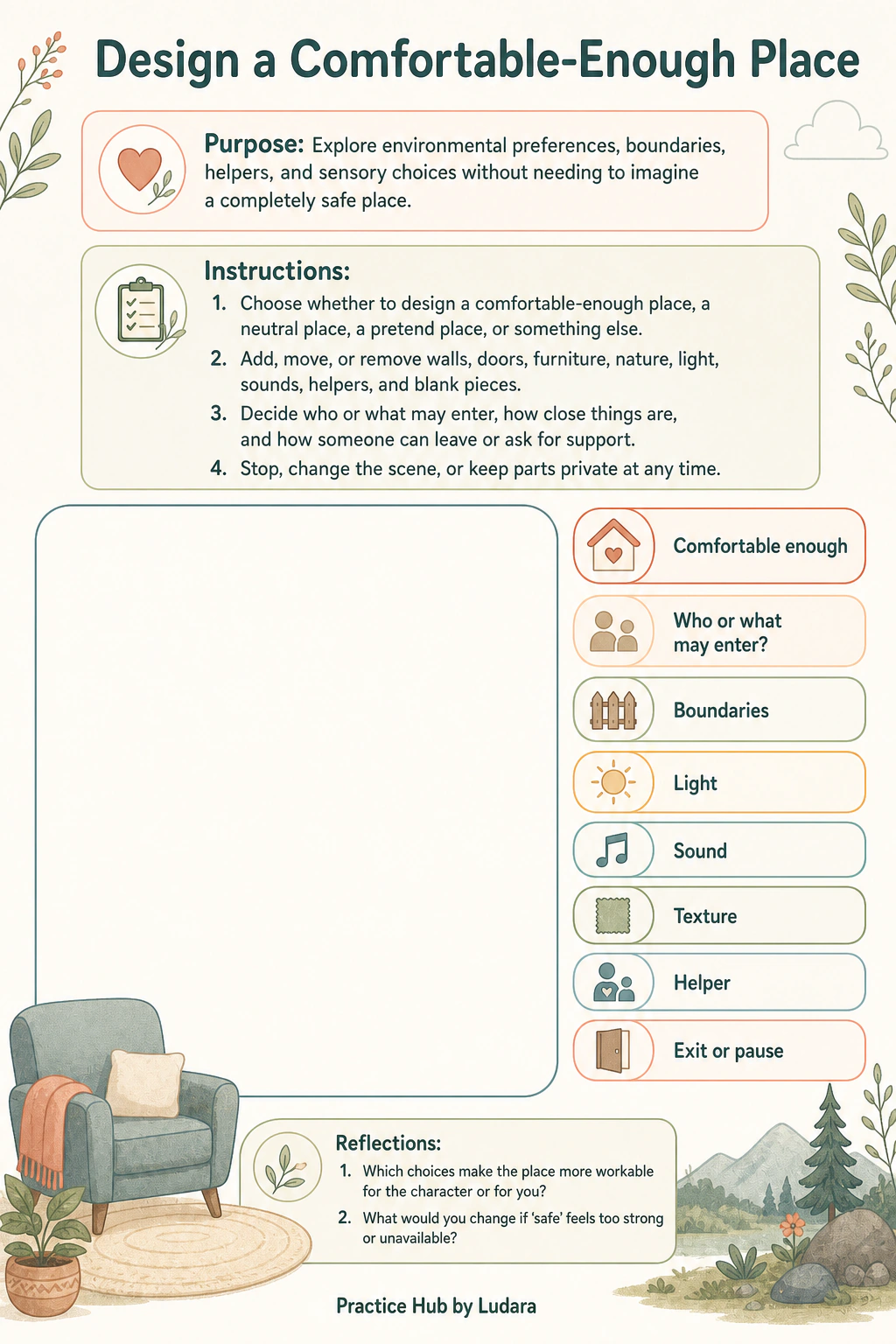
Design a Comfortable-Enough Place
Explore environmental preferences, boundaries, helpers, and sensory choices without needing to imagine a completely safe place.
Specialist review required Ages 5-12; clinician-facilitated
 15-30 minutes
 Activity
 Complete page
 View collection
Full-resolution WebP artwork with print-safe margins. Review the guidance below before use.
How to use it
- Choose whether to design a comfortable-enough place, a neutral place, a pretend place, or something else.
- Add, move, or remove walls, doors, furniture, nature, light, sounds, helpers, and blank pieces.
- Decide who or what may enter, how close things are, and how someone can leave or ask for support.
- Stop, change the scene, or keep parts private at any time.

Reflection prompts
- Which choices make the place more workable for the character or for you?
- What would you change if ‘safe’ feels too strong or unavailable?

Facilitator guidance
Use ‘comfortable enough,’ ‘more workable,’ or the child's chosen term; some children cannot identify or imagine safety. Do not promise safety, interpret omissions, or use the scene to bypass real environmental risk, safeguarding needs, or material support.

Adaptations & accessibility
- Build for a fictional character, animal, object, or future visitor.
- Use collage, blocks, miniatures, digital drag-and-drop, AAC, or verbal choices.
- Offer neutral sensory options and avoid requiring closed eyes or visualization.

Review considerations
Enhanced licensed play-therapy and trauma-informed safeguarding review required before use; avoid false safety promises, forced visualization, trauma reenactment, and symbolic over-interpretation.
This is a layout-complete draft. Complete the stated clinical, accessibility, and local-policy review before client use or publication.